

The Dachshund / Daxie / Sausage Dog
Affectionately called Sausage Dogs, and famous for their adorable, funny shape. But their long bodies and short legs were meant for more than just making humans fall in love with them or giggling at them on passing. Here are some interesting facts you may not know about Dachshunds.
They were bred 300 years ago to hunt
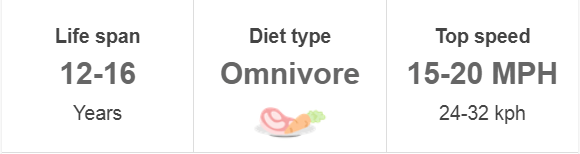
The name “Dachshund” is actually German for badger dog. Dachshunds’ short legs keep them low to the ground to track scents, and their narrow bodies allow them to crawl into burrows, looking for badgers. Despite their small size, Dachshunds are brave, fierce and strong. Over time, they were bred in different varieties to hunt different kinds of prey.

They Come in Two Sizes
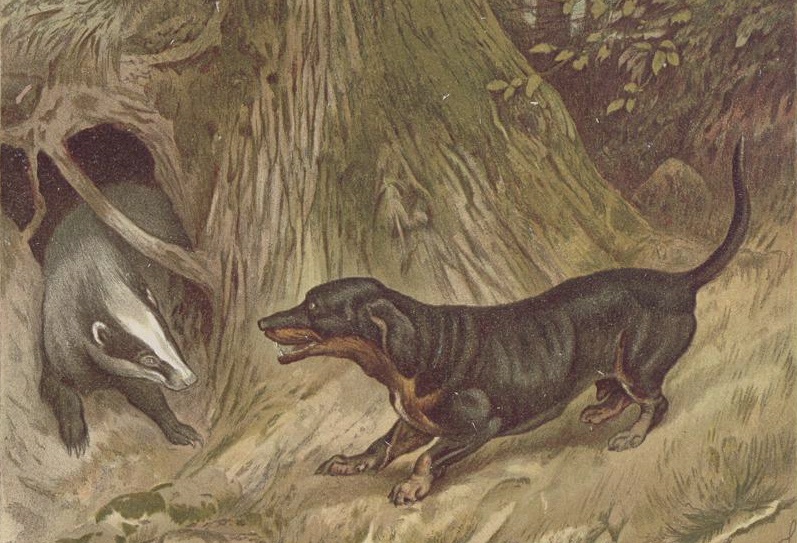
Breeders created two different sizes of Dachshunds—standard and miniature. The standard Dachshunds weigh up to 16KG and were used to hunt badgers and wild boars. The miniatures weigh up to 6KG and were bred for hunting smaller game such as rabbits. The miniature is the most popular as a family pet.
They Have Three Different Types of Coats
Dachshunds can have smooth, longhaired or wirehaired coats. All Dachshunds used to have smooth coats, and the smooth variety is still the most popular. Breeders probably crossed smooth Dachshunds with other dog breeds to produce the two other coat varieties. When it comes to the Dachshund personality there are a few differences between the fur types. The long-haired dachshund is generally found to be the calmer and quieter variant of the three. The wired-haired on the other hand is more of a mischievous trouble maker as it has some Terrier DNA present in its ancestry. The smooth-haired acts a mediator between the two variants and are the most sought after of the breed types.


They are BIG on personality
Known for their intelligence and cheerfulness, but they can also be stubborn and mischievous. Curious, independence and very courageous – which is quite ironic when you bring their size into the equation. This doesn’t hold them back in any way, they would square up to animals twice their size. Dachshunds can sometimes be aggressive towards strangers and other dogs. Despite this Dachshunds make great family pets because they are good with children, excellent watch dogs and very loyal and affectionate companions.
Important please read the below regarding permitted colours, genetic breeding and health
Dachshunds have 6 basic and correct coat colours
Only the following colours in all three Dachshund varieties are permitted by the Kennel Club:
- Red – which may be interspersed with black hairs.
- Black or Chocolate – each with tan markings (as clear as possible) over eyes, on sides of muzzle, under jaw and down chest, on lower part of legs and feet, below the tail and about one third of underside of tail.
- Dapple pattern – (lighter coloured areas on a darker base, where neither the light nor the dark colour should predominate) is permitted in any of the colours listed as acceptable, with the exception of brindle.
- Cream (fawn), interspersed black hairs are permissible.
- Black/chocolate and cream – where the cream is as clear as possible and is distributed in the same locations as the tan marking listed above.
- Brindle – black hairs forming stripes on any of the colours listed above.
Nose and nails black in all colours except chocolate/tan and chocolate dapple where they are brown. In all colours no white permissible,
Double Dapple, Isabella, Blue are unacceptable colours. These currently ‘fashionable’ colours are a result of breeders continuously breeding a recessive gene which results in the dilution of the permitted colours. This colour dilution has resulted in some serious genetic health concerns including Colour Dilution Alopecia and blindness.

Inbreeding Coefficient explained
Inbreeding occurs when puppies are produced from two related dogs, i.e. dogs with relatives in common. High levels of inbreeding can affect the health of these puppies. The higher the degree of inbreeding, the higher the risk is of the puppies developing both known and unknown inherited disorders. Inbreeding can also have an impact on the breed as a whole, e.g. reducing litter sizes and fertility.
The degree of inbreeding can be measured using a calculation called the coefficient of inbreeding (CoI), or inbreeding coefficient via the Kennel Club. This calculates the probability that two copies of a gene variant have been inherited from an ancestor common to both the mother and the father. The lower the degree of inbreeding, the lower the inbreeding coefficient.
The CoI calculator gives you a percentage score. The lower the percentage, the lower the degree of inbreeding. To put your result into perspective:
- 0% = a dog with two apparently unrelated parents (based on all available pedigree information)
- 12.5% = the genetic equivalent of a dog produced from a grandfather to granddaughter mating, or the mating of a half-brother/sister
- 25% = the genetic equivalent of a dog produced from a father to daughter mating, or the mating of full-brother/sister
- More than 25% – inbreeding is accumulative, so if it has occurred to a significant degree over several generations, the inbreeding coefficient may exceed 25%
If a breeder DNA tests their dogs, they are taking steps to avoid a known risk. By using CoI calculators when selecting potential mates, they are reducing the risk of unknown conditions. Puppies should be produced with an inbreeding coefficient which is at, or below, the breed average and ideally as low as possible. The average for the Miniature Dachshund is currently 4.8%. Our puppies have an inbreeding coefficient of under 1%.
The health of a Dachshund
Dachshunds are generally healthy dogs with a long lifespan, but they do face some health challenges due to their unique shape.
One of the most serious health issues in dachshunds is Intervertebral Disc Disease (IVDD), which occurs primarily in ages 3 to 6 years and can cause spinal cord damage and paralysis if not treated promptly. Although not the same as IVDD, similar symptoms can be caused by traumatic injury from jumping off high places such as sofa’s, beds or car boots.
Another common health concern in dachshunds is an eye problem called Progressive retinal atrophy (PRA) which can cause vision loss and blindness, especially in double dapple doxies. DNA tests are available to identify three categories of risk:
- Affected dogs – have two faulty genes and will all go on to get PRA at some point. They will eventually lose their eyesight, sometimes at a very young age.
- Carriers – have one faulty gene and one healthy gene. The healthy gene will switch off the faulty gene and a carrier will never develop retinal atrophy.
- Clear dogs – have two healthy genes and the puppy or dog can never develop retinal atrophy.
Our breeding programme of hereditary clear bloodlines ensures none of our puppies will develop PRA.



 Marthers Miniature Dachshunds